The interactions that matter on GLP-1 medication are not a long list of drug names. They come down to three things. These medicines lower blood glucose, so combining them with insulin or a sulfonylurea raises the risk of hypoglycaemia. They slow the stomach, so anything swallowed may be absorbed differently. And the regulators who write the instructions do not always agree — on one interaction they reach opposite conclusions from near-identical data. Which is why the useful action is not looking up pairings, but making sure the doctor prescribing and the pharmacist dispensing have the whole list of what you take.
Narrow therapeutic index: a medicine where the gap between a dose that works and a dose that causes harm is small, so a modest change in how much of it is absorbed can matter clinically. Warfarin and digoxin are the examples the product documents name.
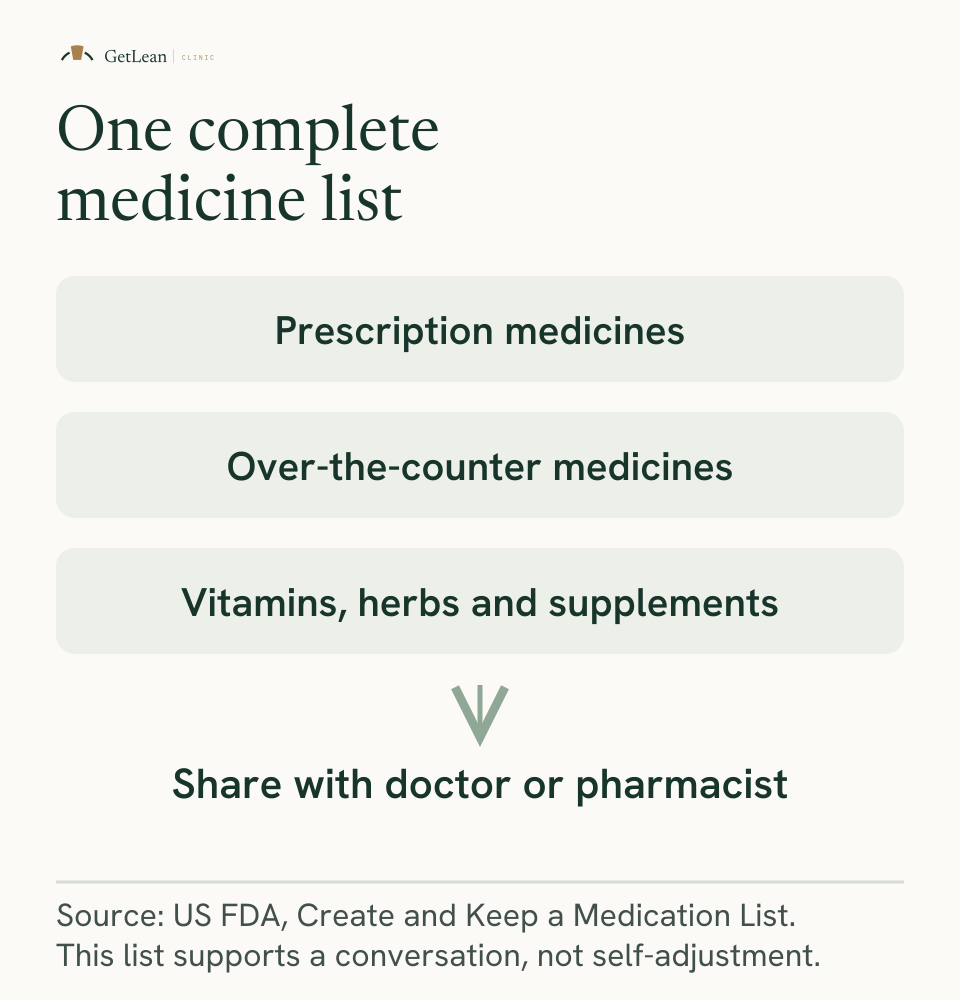
Hand over the complete list
Everything, including the parts people leave off: prescriptions from other doctors, anything bought over the counter, and anything a specialist started years ago and nobody has reviewed since.
This matters more than usual because the main interaction is mechanical rather than chemical. A slower stomach changes the timing of absorption for a swallowed medicine more or less regardless of what that medicine is, so the question is not "does this drug react with a GLP-1" but "which of my medicines depends on being absorbed predictably".
There is a second reason, specific to Singapore. The public product information pages for the registered semaglutide and tirzepatide products carry indication, dosing and contraindications, and no interactions section appears on either (National Drug Formulary). Everything below therefore comes from the US and European documents, attributed to whichever one it came from. Neither governs a prescription filled here.
Insulin and sulfonylureas: the interaction with a name
This is the one both labels treat as named and actionable.
The US prescribing information for semaglutide states that the medicine lowers blood glucose and can cause hypoglycaemia, that the risk is increased when it is used alongside insulin or an insulin secretagogue such as a sulfonylurea, and that a reduction in the dose of that insulin or secretagogue should be considered when the GLP-1 medication is started (prescribing information). Tirzepatide's US label carries the same instruction (prescribing information).
Read what that instruction asks for: a change to the other medicine, made by someone who can see both.
The symptoms patients are counselled to recognise are listed in the US Medication Guides — a US patient-facing document — and include dizziness or light-headedness, sweating, shakiness, blurred vision, weakness, hunger, headache, confusion or drowsiness and a fast heartbeat (Medication Guides).
Slowed stomach emptying, and what it does to tablets
Both US labels state that the medicine delays gastric emptying and that this has the potential to affect the absorption of oral medicines taken at the same time (semaglutide, tirzepatide).
The European documents put it differently. The summary of product characteristics for semaglutide reports that no clinically relevant effect on the rate of gastric emptying was observed at the 2.4 mg dose, while still advising caution in patients taking oral medicines that need rapid absorption (SmPC). For tirzepatide, the European document states the effect is most pronounced at the start of treatment (SmPC).
The concern is therefore front-loaded rather than permanent, and weighed against whatever else is on your list.
Medicines with a narrow therapeutic index
The four documents say four slightly different things here, and the differences are informative.
- Semaglutide, US. A generic instruction to monitor the effects of oral medicines given alongside, and to consider increased clinical or laboratory monitoring for those with a narrow therapeutic index. No drug is named (prescribing information).
- Tirzepatide, US. The same caution, with warfarin named as the example (prescribing information).
- Tirzepatide, EU. Warfarin and digoxin named, with monitoring advised especially at initiation and after a dose increase (SmPC).
- Semaglutide, EU. The phrase "narrow therapeutic index" is not used at all. A warfarin study found no change in exposure and no clinically relevant change in INR — and the document still recommends frequent INR monitoring when semaglutide is started in patients on warfarin or other coumarin derivatives, prompted by post-marketing reports of decreased INR with a different coumarin (SmPC).
That last one is the most instructive entry here: a negative study did not produce a relaxed instruction, because a separate signal warranted monitoring anyway. Anyone on warfarin or a related anticoagulant has a live reason to raise it before starting.
Thyroid medication: the finding attaches to the tablet
One quantified interaction exists here, and it belongs to a specific formulation. Levothyroxine exposure increased by 33% (90% CI 1.25–1.42) when it was given with semaglutide tablets in a drug-interaction study, and the same sentence appears word for word across the US oral-semaglutide-tablet labels (prescribing information).
The formulation is the point rather than a technicality: it is a tablet finding, not an injection one, and tirzepatide's US label does not mention levothyroxine anywhere (prescribing information). If you take thyroid replacement, name it at the consultation — its dose is titrated to a blood test.
Oral contraceptives: same numbers, opposite instructions
For tirzepatide, two regulators looked at essentially the same pharmacokinetic data and issued contradictory instructions.
The US label advises patients using oral hormonal contraceptives to switch to a non-oral method, or add a barrier method, for 4 weeks after starting and after each dose increase (prescribing information). The European document reports the same finding — peak concentrations of the contraceptive hormones reduced by 55–66% (SmPC) — and concludes the reduction after a single dose of tirzepatide is not clinically relevant, with no dose adjustment required (SmPC).
For semaglutide, the European document states that a reduction in oral-contraceptive effectiveness is not anticipated (SmPC). The US semaglutide label does not address oral contraceptives at all, and that silence is not confirmation of anything either way (prescribing information).
Neither instruction can be presented as the universal one, and merging them into a single tidy rule would misrepresent both. If contraception matters to you, it is a specific question for your prescriber, tied to the medicine you are actually on.
At GetLean, our philosophy is that the medication is the catalyst and the clinical work around it is what makes it safe — the medicine list is the least glamorous part of that work.
Individual circumstances vary. Nothing here replaces the leaflet supplied with your medicine or the doctor who prescribed it, and no medicine on your list should be changed, spaced out or stopped on the strength of an article. We cover the wider eligibility picture in who should not take GLP-1 medication.
Common questions
Which medicines interact with GLP-1 medication?
The two the labels treat as named risks are insulin and insulin secretagogues such as sulfonylureas, because of hypoglycaemia (prescribing information), and swallowed medicines with a narrow therapeutic index, because slowed stomach emptying can change absorption (prescribing information). The list of what you take is the thing to hand over, not to filter.
Does GLP-1 medication stop the contraceptive pill working?
The two regulators disagree for tirzepatide. From near-identical exposure data, the US label instructs a switch to a non-oral method or an added barrier method for 4 weeks after starting and after each dose increase (prescribing information); the European document concludes no dose adjustment is required (SmPC). For semaglutide the European document does not anticipate reduced effectiveness (SmPC). This is a question for your own prescriber.
Do you need to change your insulin dose on GLP-1 medication?
That is a prescriber's decision, and the labels point at it directly: both US documents advise considering a reduction in the dose of concomitant insulin or insulin secretagogue when the GLP-1 medication is started (semaglutide, tirzepatide). The change is to the other medicine, which is why it needs someone who can see both.
Does GLP-1 medication affect thyroid medication?
One finding exists and it attaches to a specific formulation: levothyroxine exposure rose 33% when given with semaglutide tablets (prescribing information). It is a tablet finding, not an injection one, and tirzepatide's US label does not mention levothyroxine at all.
Should you tell your pharmacist you are on GLP-1 medication?
Yes, and Singapore gives a particular reason to. The public product information page for the registered semaglutide and tirzepatide products carries indication, dosing and contraindications, with no interactions section (National Drug Formulary), so the pharmacist's own record is doing work a portal cannot.