"Food noise" is the term people use for the constant, intrusive background hum of thinking about food — planning the next meal during the current one, negotiating with yourself about the kitchen. Many people on GLP-1 medication report that it goes quiet, and that is often the change they mention before weight. It is also a term that arrived from patients rather than from research, and the first validated way to measure it appeared only in 2025. This article covers both halves of that honestly.
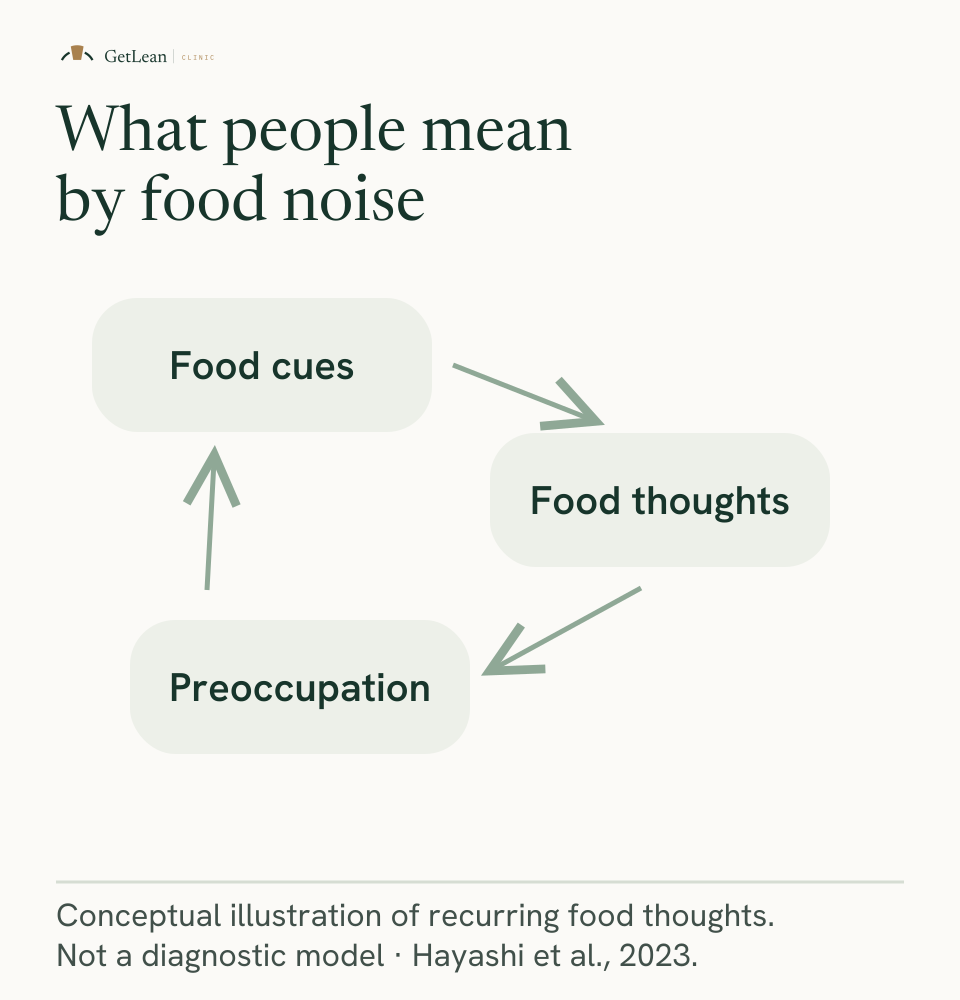
Food noise: a patient-derived term for persistent, intrusive preoccupation with food. Not a diagnosis, and not something with a long research history.
Where the term came from
Not from a laboratory. From people describing their own experience, and clinicians hearing the same description repeatedly.
The founding academic treatment is a 2023 narrative review, which proposed a conceptual model for the phenomenon. It was explicitly motivated by patient and clinician reports of reduced rumination and preoccupation with food on GLP-1 medication, and it stated that systematic investigation and a means of measurement were still needed (Hayashi 2023).
Read that carefully. The founding paper is a review proposing a model, not a study measuring a thing, and its own conclusion is that a means of measurement was still required.
Two years later, a 2025 review restated the position: "a formal clinical definition and method of measurement of food noise are lacking", and proposed one — persistent thoughts about food perceived by the individual as unwanted or distressing and potentially harmful (Dhurandhar 2025).
When it became measurable
In 2025, and there are now competing instruments rather than one settled tool.
A validation study published that year produced the Food Noise Questionnaire, with a Cronbach's alpha of 0.93 across 396 analysed participants and test-retest reliability of 0.79 in a 150-person subsample — and its authors stated that no validated questionnaire for this had existed before (Diktas 2025). A different review published the same year proposed a separate instrument.
So the field has two early tools, published two years after the term entered clinical conversation and well after GLP-1 medication came into wide use.
What follows from that: no GLP-1 trial has measured "food noise" as such, because there was nothing validated to measure it with while those trials were running. Anyone describing "clinically validated food-noise reduction" is describing something that does not exist yet.
What trials did measure
Related things, with instruments that existed at the time, and the findings are real.
In a crossover trial, semaglutide reduced total food intake across a single laboratory test day by about 24% versus placebo, and participants reported less hunger and food craving, better control of eating, and a lower preference for high-fat foods (Blundell 2017). That intake figure comes from a laboratory test day rather than tracked daily eating.
In the STEP 5 sub-study, craving-control scores on a self-report eating-control questionnaire improved significantly versus placebo at weeks 20, 52 and 104, all p<0.01 (STEP 5 sub-study). Those are mean differences on a questionnaire, in people also losing weight — not the elimination of cravings, and the instrument's own authors describe its validation as preliminary.
So the accurate summary is: measures adjacent to food noise improved on treatment, in trials, versus placebo. That is meaningfully different from "the medication quietens food noise", and meaningfully more than nothing.
Why it plausibly happens
GLP-1 receptor signalling acts on appetite regulation as part of how the medication works (Drucker 2018). Appetite regulation is not only about the physical sensation of hunger — it involves how much attention food commands.
So a mechanism exists that could produce the reported experience. What has not happened is a study measuring the specific reported experience against that mechanism. The gap between "plausible and widely reported" and "measured" is where this topic sits, and it is a normal place for a young construct to be.
We cover the underlying mechanism in how GLP-1 medications work.
Why the distinction matters
"Food noise" has become a marketing phrase, and it is the kind of claim that inflates easily.
The statement that GLP-1 medication is clinically proven to quieten food noise is false in a specific and checkable way: the measurement tools postdate the trials. What the trials measured is set out above. The reported experience stands as what it is — widely reported, plausible, and not yet formally studied under that name.
If you experience it, that experience is not invalidated by the literature being young. Patients described this before researchers had a word for it, which is how a good deal of clinical knowledge starts.
At GetLean, our philosophy is that the medication is the catalyst and what you keep is the result. Quieter food noise, if you get it, is a window rather than an outcome — the period in which building a different pattern of eating is easier than it will be later.
Individual results vary, and clinical-trial figures describe the populations studied.
Common questions
What does food noise mean?
The persistent, intrusive preoccupation with food that many people describe. A 2025 review proposed defining it as persistent thoughts about food perceived by the individual as unwanted or distressing and potentially harmful (Dhurandhar 2025).
Is food noise a real medical condition?
It is a patient-derived term, not a diagnosis. The 2023 narrative review that introduced it academically proposed a model and said measurement was still needed (Hayashi 2023); the first validated questionnaire appeared in 2025 (Diktas 2025).
Does GLP-1 medication reduce food noise?
No trial has measured food noise as such, because no validated measure existed until 2025. Related measures did improve — craving-control scores were significantly better than placebo in the STEP 5 sub-study (STEP 5), and participants reported less hunger and better control of eating in an earlier trial (Blundell 2017).
Why do so many people describe the same thing?
Because the term named an experience people recognised. That is how it reached the literature — patient and clinician reports first, formal study afterwards (Hayashi 2023).
Does food noise come back if you stop?
Nobody has measured it. The withdrawal trials recorded weight and cardiometabolic markers rather than appetite or craving outcomes after stopping — see appetite after stopping.