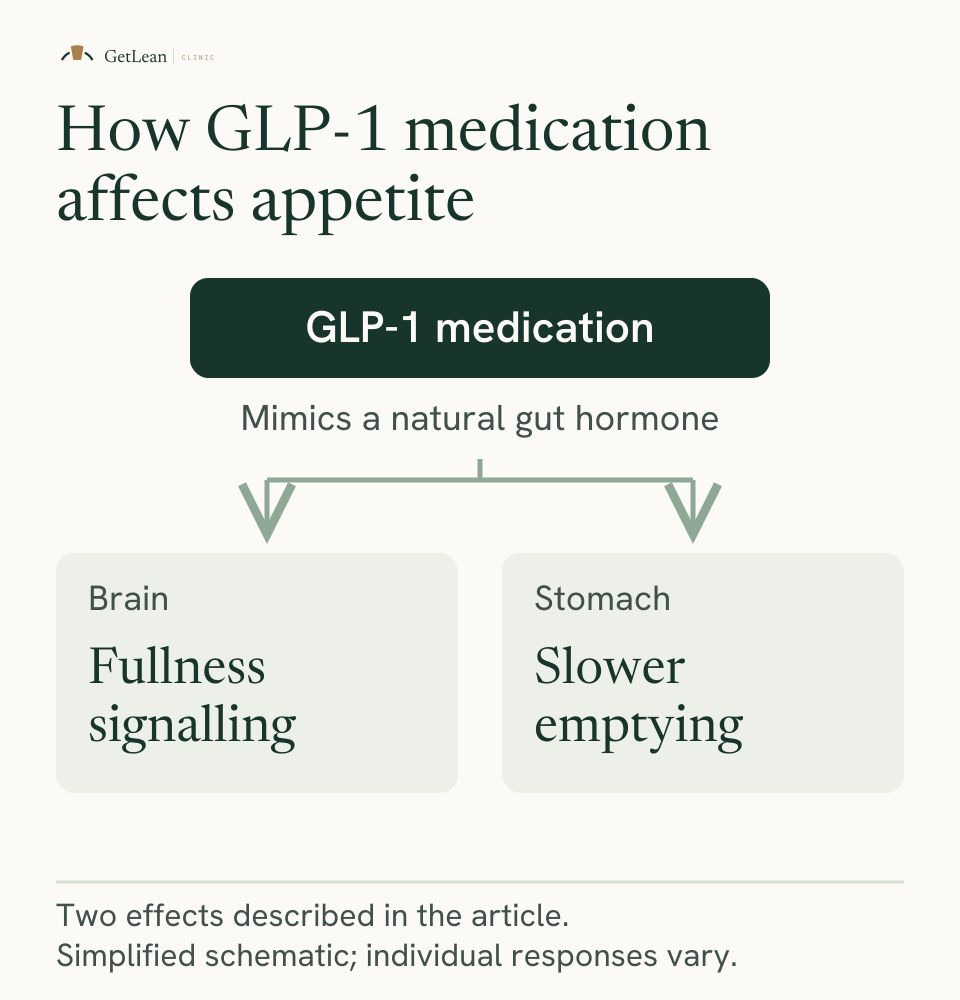
GLP-1 medications work by mimicking a hormone your gut already produces — one that signals fullness to your brain and slows the rate at which your stomach empties. The result is that you feel full sooner, stay full longer, and for many people, think about food less. This article explains the mechanism in plain terms: what the hormone does, how it acts on the brain, what "food noise" is, and what you need to know about getting it prescribed safely in Singapore.
GLP-1 (glucagon-like peptide-1): a hormone released by cells in the small intestine after you eat, which signals fullness to the brain and slows gastric emptying. GLP-1 medications are long-acting synthetic versions of this hormone, designed to keep these signals active far longer than the natural version does.
What does a GLP-1 medication actually do in the body?
GLP-1 medication works through two main mechanisms: it sends fullness signals to appetite centres in the brain, and it slows the rate at which food leaves your stomach (Drucker 2018). Your gut releases GLP-1 when you eat. The natural hormone is broken down within minutes, and the whole meal-related signal fades within about two to three hours. GLP-1 medication is engineered to resist that breakdown — so instead of fading after a meal, one weekly dose keeps the signal steady across the week.
The practical effect is that smaller amounts of food produce a stronger and longer-lasting sense of fullness. You are not overriding hunger through willpower — the hormonal signal itself has changed. Individual results vary, and the medication works best when it is part of a broader plan that includes nutrition and muscle protection.
How does it work on the brain?
In mice studies, GLP-1 medication acts directly on the appetite centres of the brain, turning up the neurons that signal fullness and turning down the ones that drive hunger — and the same biological mechanism is present in humans (Knudsen 2016). This is not sedation or mood alteration. It is a targeted change to the circuits that regulate how hungry or full you feel.
That part of the brain works like an appetite thermostat. When energy stores are low, the hunger neurons fire and you feel the urge to eat. GLP-1 medication turns those down and the fullness neurons up — so rather than suppressing hunger from the outside, it changes how the system reads its own signals.
This is why some people on GLP-1 medication report that food simply becomes less compelling. They still eat; they just do not feel the same urgency around it. The question is whether that experience has a specific name — and it does.
What is "food noise", and why does it quieten?
"Food noise" describes the persistent, intrusive mental preoccupation with food — the near-constant background hum of thinking about what to eat next, when to eat, whether you have eaten enough, or craving specific foods. Many patients and clinicians report that GLP-1 medication reduces this preoccupation significantly (Hayashi 2023).
It is important to be precise about what the evidence actually says here. Food noise reduction is a widely reported patient experience; it is not yet a formally measured trial outcome with a standardised scale. The Hayashi review is explicit on this point. That does not make the reports unreliable — it means the research has not yet caught up with a consistent clinical observation. For many people starting GLP-1 medication, the quietening of food noise is among the most notable early changes they describe.
The likely mechanism connects back to the appetite centres described above. When the hunger neurons are less active, the mental drive to seek food eases along with the physical sensation of hunger.
Does it slow down your stomach?
Yes. GLP-1 medication slows gastric emptying — the rate at which food moves from the stomach into the small intestine (Drucker 2018). When food stays in the stomach longer, the physical sensation of fullness persists for more time after a meal. This is a separate mechanism from the brain-level appetite signalling, and the two effects reinforce each other.
The practical consequence is that smaller meals feel more substantial. Some people notice this as early satiety — the sense of being satisfied well before finishing what they would previously have eaten. This is also the mechanism behind some of the gastrointestinal side effects that can occur early in treatment, including nausea, as the digestive system adjusts to a slower transit rate. For most people these ease as the body adapts or as the dose is stabilised. See GLP-1 side effects: what to expect and when to call your doctor for a full account.
Is this just an appetite suppressant, or does it change biology?
The distinction matters. An appetite suppressant in the conventional sense acts on hunger as an external brake — it reduces appetite without changing the underlying biological signals. GLP-1 medication does something different: it mimics and extends a hormone signal your body already uses to regulate appetite. It is not forcing the system to stop; it is turning up an existing signal that the system was already designed to respond to.
This is also why the medication alone is not the whole answer. The biological recalibration creates a window — reduced hunger, reduced food noise, earlier satiety — in which it becomes much more possible to eat well and protect muscle. What happens in that window determines a great deal of the long-term result. Read losing weight vs. getting lean: why the difference matters for more on why body composition, not just weight, is the measure that counts.
The medication is the catalyst. Protecting muscle, eating enough protein, and planning the exit from medication are the work that makes the result stick. Individual results vary and depend substantially on what is built around the medication.
How do you get it in Singapore?
GLP-1 medications such as semaglutide and tirzepatide are prescription-only medicines in Singapore, so a doctor registered with the Singapore Medical Council assesses you and decides whether the medication is clinically appropriate before anything is dispensed.
Telemedicine in Singapore is licensed under the Healthcare Services Act as the remote provision of an Outpatient Medical Service, and doctors conducting video consultations work to the same clinical standards as in person (MOH 2024). A proper assessment covers your medical history, current medications, contraindications and weight history — not simply a number on a scale.
At GetLean, the doctor who prescribes is registered with the Singapore Medical Council, the consultation is a full clinical assessment, and we dispense the medication ourselves rather than routing you to a third party. If you are comparing providers, those are the useful things to ask about: who prescribes, what the assessment actually involves, and how you reach a clinician if something changes.
Common questions
Do GLP-1 medications work on the brain or the stomach?
Both. They act on appetite centres in the brain to reduce hunger signals, and they slow gastric emptying so you feel full longer after eating (Drucker 2018, Knudsen 2016). The two effects reinforce each other rather than operating independently.
Is food noise a real thing?
Many patients and clinicians report that GLP-1 medication significantly reduces the persistent, intrusive preoccupation with food they describe as food noise (Hayashi 2023). It is a widely reported clinical experience, though it has not yet been formally measured as a primary trial outcome. The evidence base for the phenomenon is growing.
How fast does appetite drop on a GLP-1 medication?
Appetite effects build gradually through the dose-escalation period, which typically unfolds over several months. Some people notice a shift in hunger relatively early; others notice it more gradually as the dose increases. Individual responses vary and no personal timeline can be promised.
Is a GLP-1 medication just an appetite suppressant?
It changes the biology of appetite regulation — specifically, it extends a hormonal signal your body already uses to register fullness, rather than suppressing hunger from the outside. The results depend substantially on what you do around the medication: protecting muscle, eating adequate protein, and planning your exit from treatment. Read stopping GLP-1 medication: what happens and how to prepare for what the evidence says about the period after treatment ends.
Can I buy a GLP-1 medication without seeing a doctor in Singapore?
No. GLP-1 medications are prescription-only in Singapore. A doctor must conduct a proper assessment before prescribing, whether the consultation happens in person or by video (MOH 2024). Any service that dispenses the medication without that assessment is operating outside the required standard of care.